Sign in. It’s quick, free and it’s up to you.
An account is an optional way to support the work we do. Find out more.
Sign in. It’s quick, free and it’s up to you.
An account is an optional way to support the work we do. Find out more.
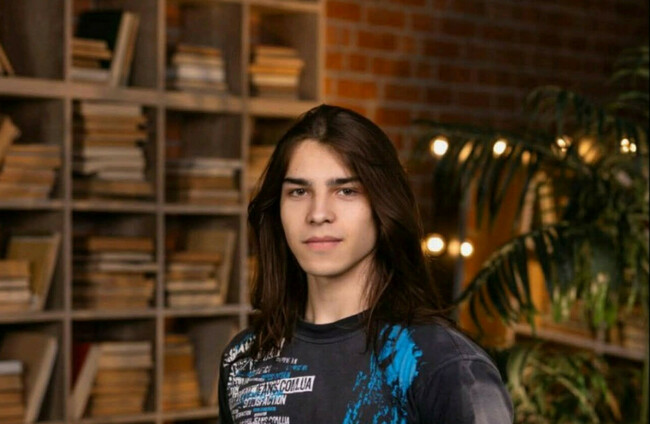
A TEMPORARY ACCOMMODATION centre contracted by the Child and Family Agency in Dublin was closed after a teenage boy who had recently arrived from Kyiv died violently there last year.
Vadym Davydenko died after sustaining injuries during an incident in an apartment on the second floor of the Grattan Woods apartment building, which was being used to house children in Tusla’s care in the northside suburb of Donaghmede on 16 October 2025.
A Somalian youth has been charged with his murder and is currently before the courts.
A Tusla review conducted in the wake of the teenager’s death found that the “nature of the accommodation” was a factor in the decision to stop placing children there, a spokesperson said.
A spokesperson for the Department of Children said that Minister Norma Foley has read Tusla’s rapid review of the circumstances surrounding the death, but that the Minister cannot comment further due to the ongoing criminal case.
Vadym was being housed under what’s known as a ‘Special Emergency Arrangement’ (SEA).
A source working with children who are classified by Tusla as ‘Unaccompanied Children Seeking International Protection’ explained that the practice of children being placed in flats in apartment buildings would only ever happen via SEAs, which operate under less stringent regulations compared to mainstream Tusla residential centres.
In these unregulated settings – which are usually hotels, BnBs, or privately leased properties – children are cared for by privately-hired staff, and there are weaker regulations and standards in place than in Tusla-operated care centres.
SEAs are not subject to HIQA inspections that mainstream services are, and therefore they are not independently regulated. These settings only have basic safety checks, whereas mainstream services have comprehensive safety requirements, and they are inspected against those benchmarks continuously.
The centre was being run by a private operator, Kare Plus South. Tusla has confirmed to The Journal it still has Special Emergency Arrangement (SEAs) within eight other locations with the firm.
Tusla said that it had multiple reasons for closing the centre. In a written response to a parliamentary question (PQ), a spokesperson for the agency said it was not deemed appropriate to return the other occupants of the centre to the location after Vadym Davydenko’s death as it could re-traumatise them.
“There was significant property damage. A significant event review was to be undertaken.”
The spokesperson said, in reply to the PQ, that following the tragic incident “the nature of the accommodation was considered” as part of the significant event review.
Tusla began placing children in this apartment in 2023.
Tusla told The Journal that this week it had finished its review, and that a wider independent review will now be undertaken by the National Review Panel, which conducts probes the circumstances around child deaths and serious incidents.
349 children who were in Tusla’s mainstream services resided in special emergency accommodation last year. 180 lived in hotels, 160 lived in privately leased properties, and nine lived in Tusla properties.
Children who arrive into Ireland from other countries and are then placed in SEAs are counted separately by Tusla.
796 of these children were placed in these settings by Tusla last year, including 131 who lived in hotels, and 665 who lived in privately leased properties.
Tusla notes that a “small number” of children in each category may have moved from one type of SEA to another, e.g. from a hotel to a private property.
Tusla also said that a small number of children in these figures “may have been counted more than once”.
Tusla has told The Journal that it has continued placing children in these types of settings this year.
Just up until the week ending 4 January, 44 children from mainstream services were placed in SEAs, with one resident in a hotel, 39 in private properties, and four in Tusla owned properties.
In that same week 109 children seeking international protection were placed in SEAs. All of these children were housed in private properties operated by private firms, with the majority being in Dublin.
People Before Profit TD Paul Murphy told The Journal that the death of Vadym Davydenko has “shone a light” on the “scandal of the use of privatised, largely unregulated special emergency arrangements”.
“All of the centres run by private companies need to be urgently reviewed for safety and suitability. We need to rapidly move away from reliance on these private providers by properly investing in public care for children,” he added.
The Social Democrats have also called for the use of SEAs to end.
Social care watchdog body HIQA has said that there is an urgent need to build accommodation capacity in Tusla’s services to allow for a transition away from the private sector and from “inappropriate” placements.
To embed this post, copy the code below on your site
















have your say